“I've Been a Cardiac Nurse for 26 Years. I've Watched Thousands of Patients Get ‘Borderline’ News. So I Tested the 5 Best-Selling Blood Sugar & Cholesterol Supplements for 6 Weeks Each — Here's the Only One I'd Ever Recommend to My Own Sister.”
Same routine, same nurse's notebook, same skeptic. Four brands turned out to be the same pouch with a different name. One wasn't — and it's the only one I re-ordered.
By Susan Hartley, RN
Cardiac Care Nurse (26 yrs) & Health Blogger · Columbus, Ohio · reads lab panels for a living
Published August 12, 2026 · 187,412 reads
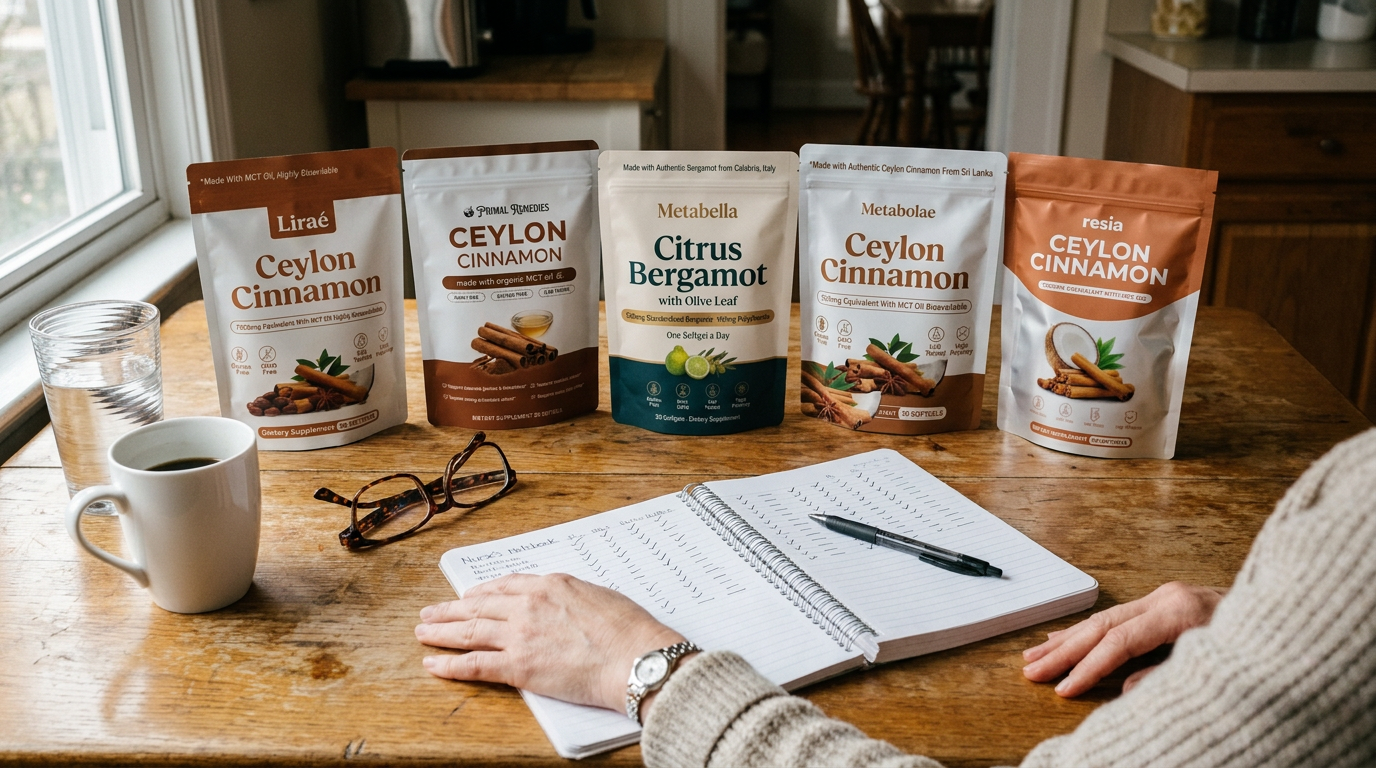
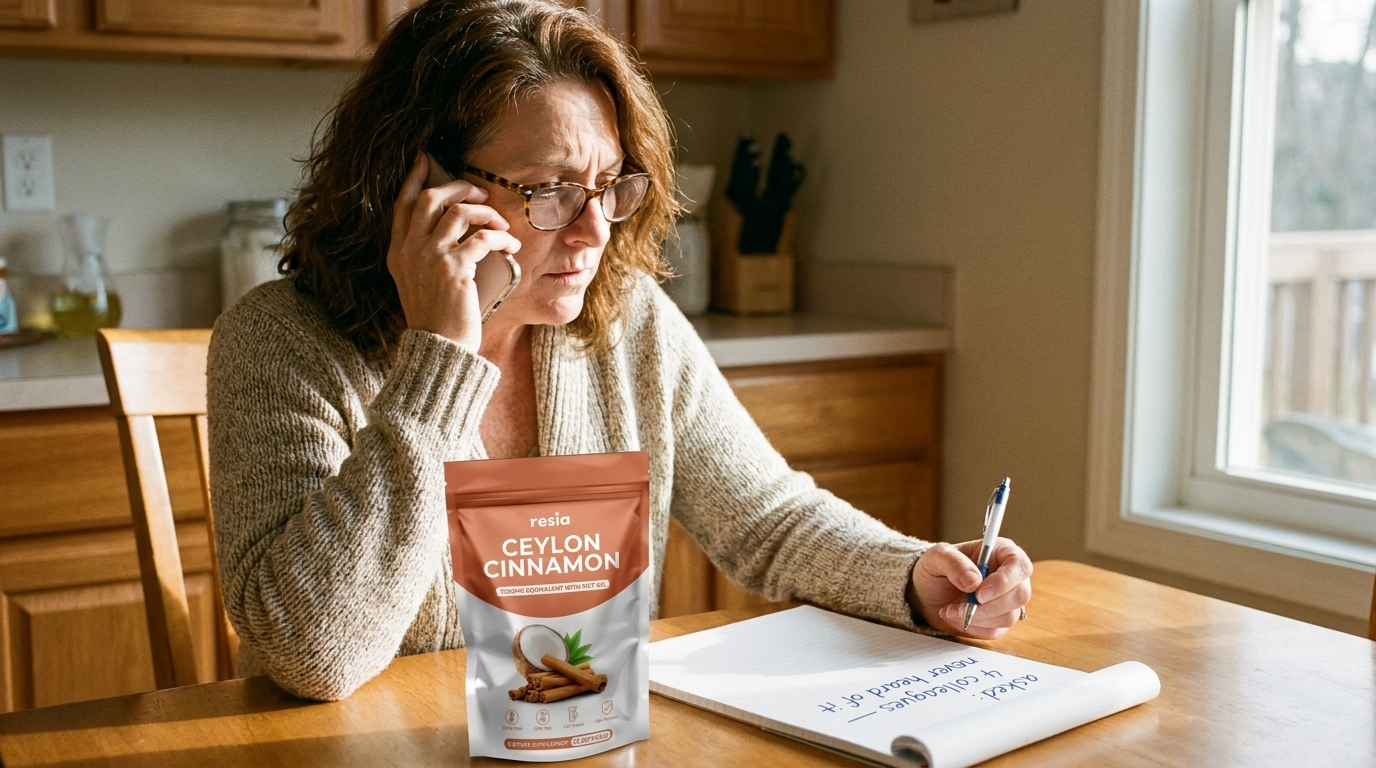
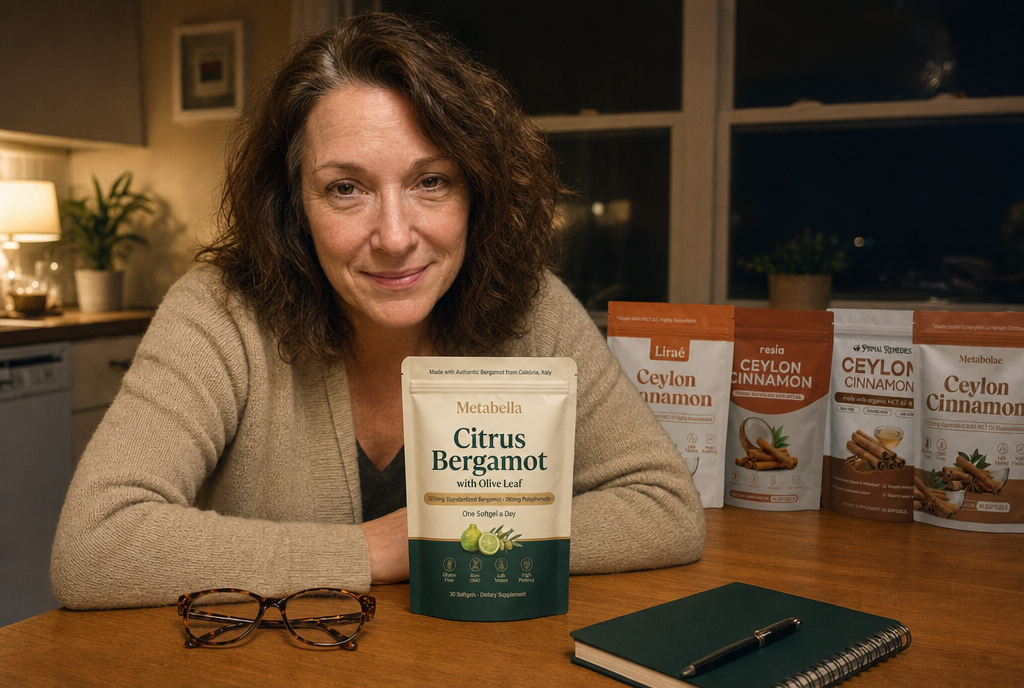
The five best-sellers, lined up on my kitchen table before the first morning.See the Best-Sellers →
Let me tell you what my job actually looks like, because it explains everything that follows. For 26 years I've been the nurse in the room when a doctor reads someone their numbers. Cholesterol. LDL. Fasting glucose. A1C. I've watched a thousand faces do the same thing: go quiet, nod, and then ask me in the hallway — not the doctor, me — “Susan, is there something natural I can try first?”
And for 26 years I've watched what they bring back. Bags of them. Cinnamon capsules. Berberine. Fish oil. Gummies. Bottles with big numbers on the front and nothing useful on the back. I've read more supplement labels standing at a bedside than most people read in a lifetime — and I read them the way I read a chart: I skip the promise and look for the dose.
So when the “blood sugar softgel” ads started filling my Facebook feed last year — the same pouch, it seemed, over and over — my first reaction was the nurse eye-roll. I've seen this movie. But then patients started asking about them by name. My sister asked. My husband's golf buddy asked. And when I actually sat down and read the science, the idea underneath wasn't crazy: there are botanicals with real human trials for supporting healthy cholesterol and steady blood sugar already in a normal range.† The question was never “does anything work.” The question was which of these pouches is actually the thing the studies were about — and which is just borrowing the story.
So I did what I tell my patients to do and almost none of them have time for: I bought all five best-sellers with my own money and tested them one after another. Liraé. Primal Remedies. Metabolae. Resia. Metabella. Six weeks each — because the cinnamon brands themselves say “4–8 weeks,” and I wanted to give every one of them a fair shot. Same morning routine, same notebook, same five things logged every day.
I went in expecting to write the article I've been giving as a hallway speech for two decades: “save your money.” That is not how this ended. But it also didn't end the way the ads promise. It ended with a discovery I genuinely didn't see coming — and one pouch left in my cabinet.
“I wasn't looking for a miracle. I was looking for the one brand that wasn't hiding something. Out of five, exactly one printed the real number — and it was the only one I couldn't bring myself to quit.”
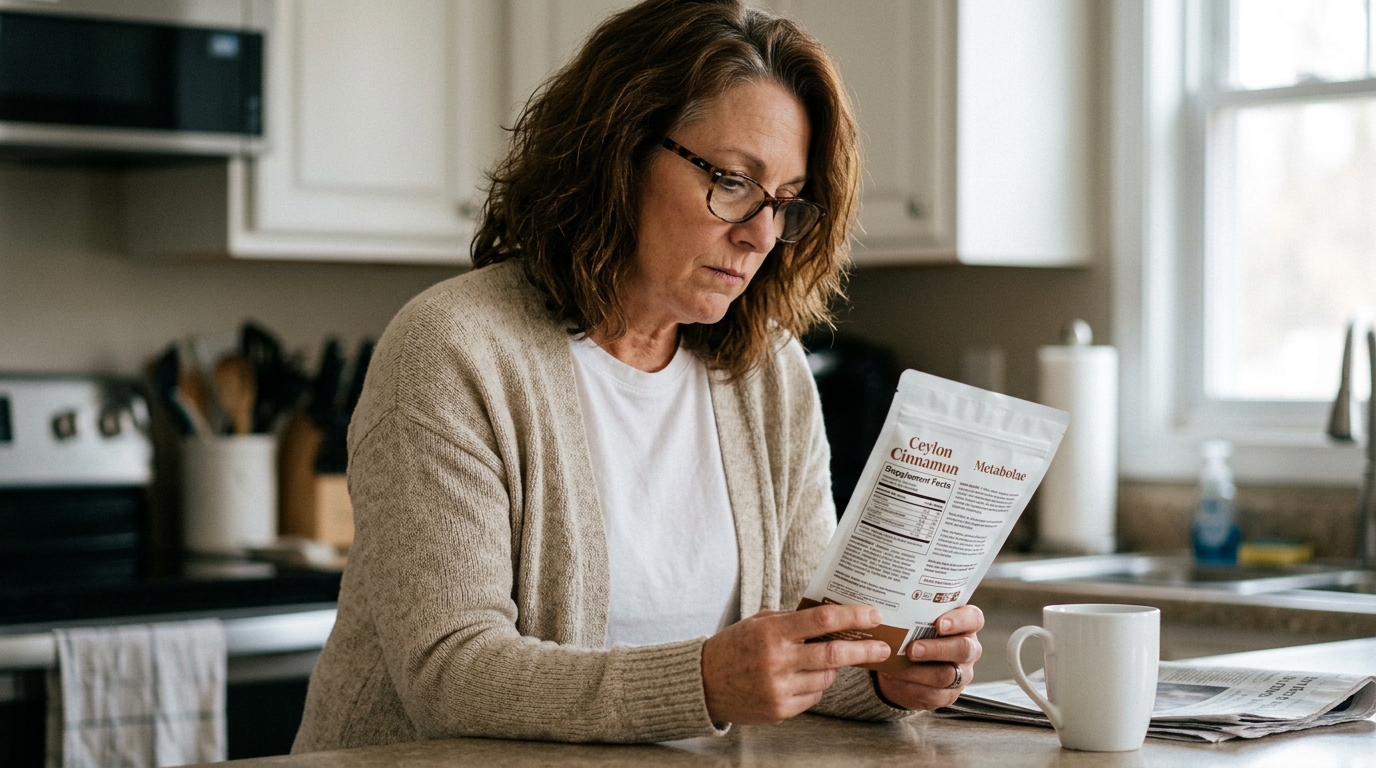
I read every label the way I read a chart: skip the promise, find the dose.
How I Actually Ran This (No Cherry-Picking)
Same protocol for all five so nothing got an unfair edge: one softgel every morning with breakfast, nothing else new during a brand's run, my normal walks and my normal (imperfect) diet. Every day I logged the same five things in a nurse's notebook — afternoon energy, cravings after lunch, how my feet felt on the evening walk, any stomach upset, and whether I actually remembered to take it (the boring reason most supplements “don't work” is that people quit). I also had my routine bloodwork done before I started and again after the last brand — I won't print my numbers here, because one nurse's panel is an anecdote, not a study. But I'll tell you what my doctor said. Thirty weeks of mornings later, here's the honest breakdown.
The Four That Didn't Make It
I'll take them in the order I tested them. None of these are scams — they're real products from real companies. But each lost me for a specific, concrete reason, and as someone who has spent 26 years reading labels and lab panels, those reasons jumped out fast. And somewhere around brand three, I noticed something that changed how I read all four.
Brand tested
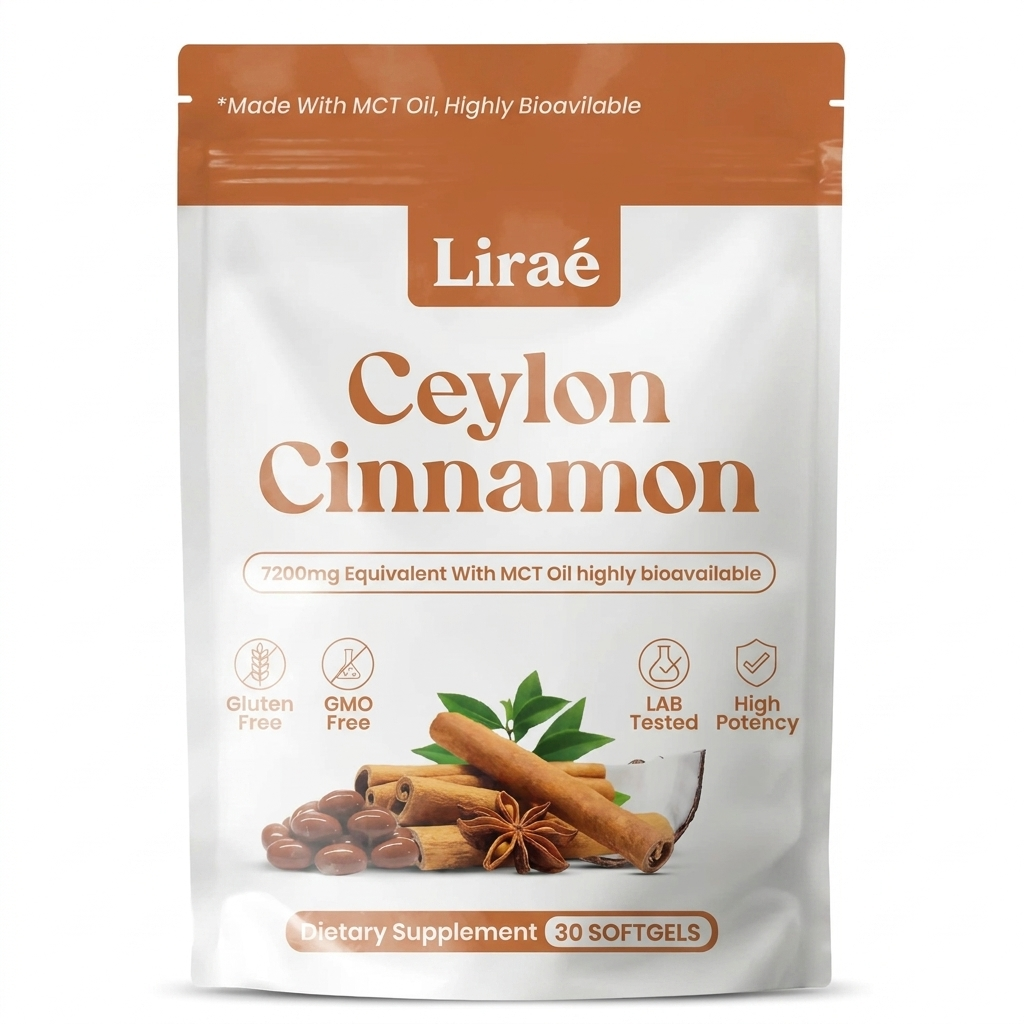
Liraé — The One That Was 'Sold Out' Before I Could Read the Label
I'll be fair: Liraé's pouch looks lovely, the softgel is easy, and the “true Ceylon, coumarin-free” story on the front is accurate — Ceylon cinnamon really is the gentler cousin of the cheap Cassia in your spice rack. If a patient showed me this pouch, my first reaction would be “well, at least it's not Cassia.”
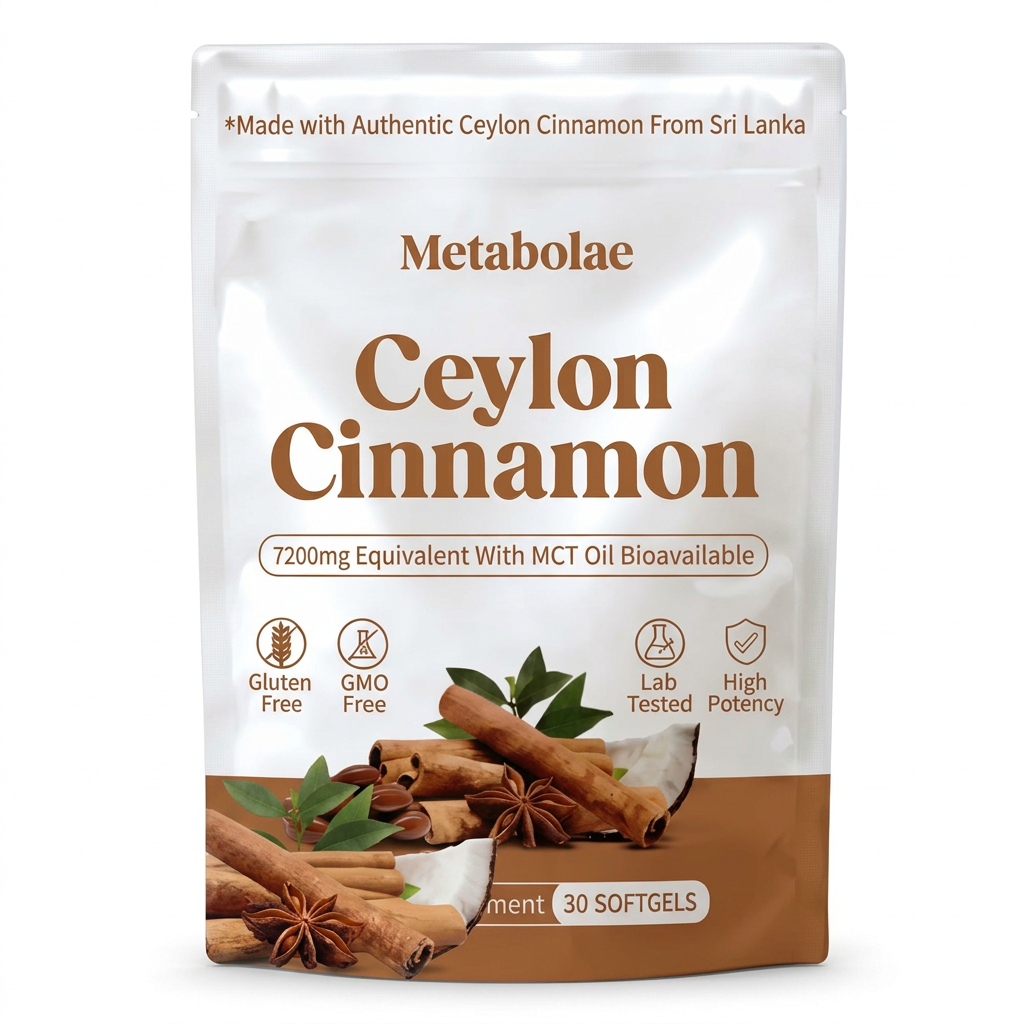
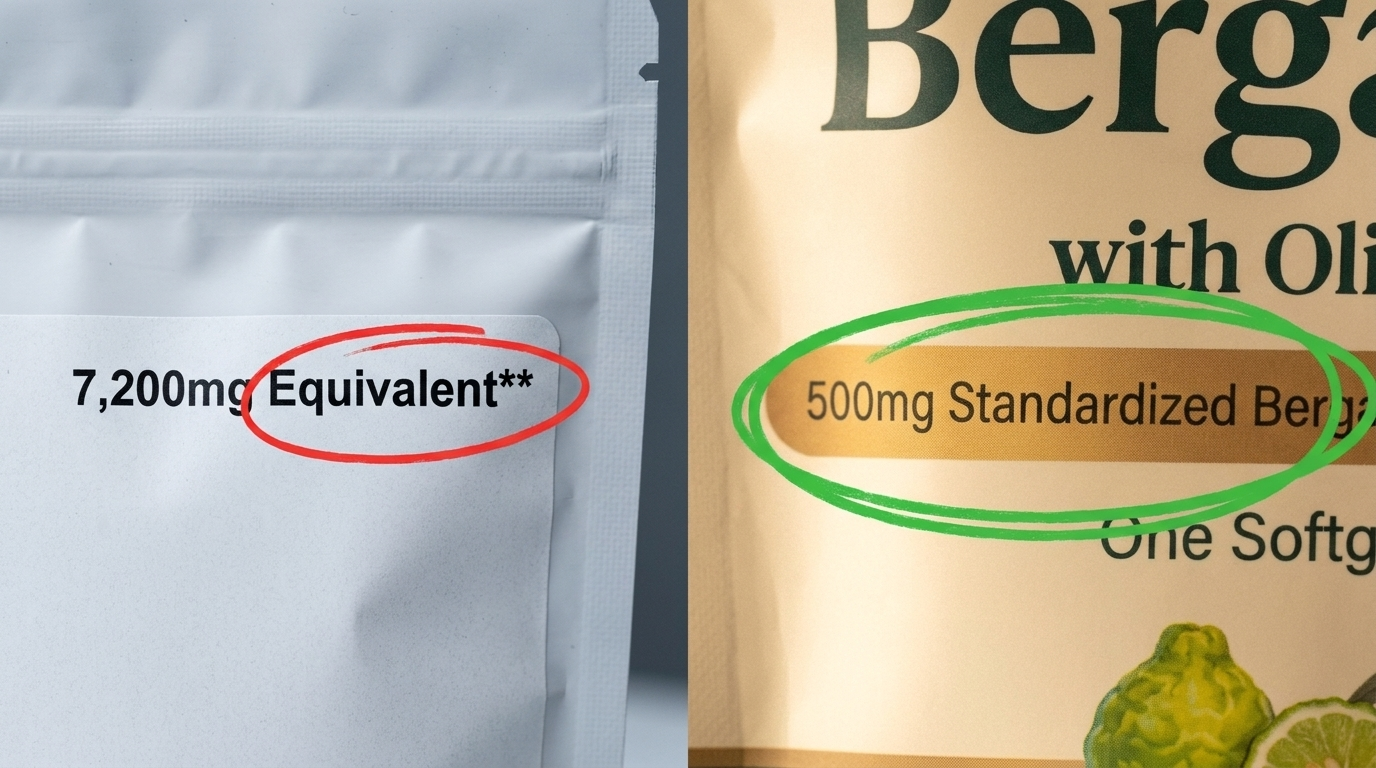
My second reaction came from the label. “7,200 mg Ceylon Cinnamon Equivalent.” I've been reading dosages for 26 years and I know exactly what that word is doing. “Equivalent” means: the extract inside is roughly 600 mg at a 12:1 concentration, so on paper it “equals” 7,200 mg of raw bark. It's a multiplication, not a dose. Nowhere on the pouch does it tell you what's actually standardized, or to what.
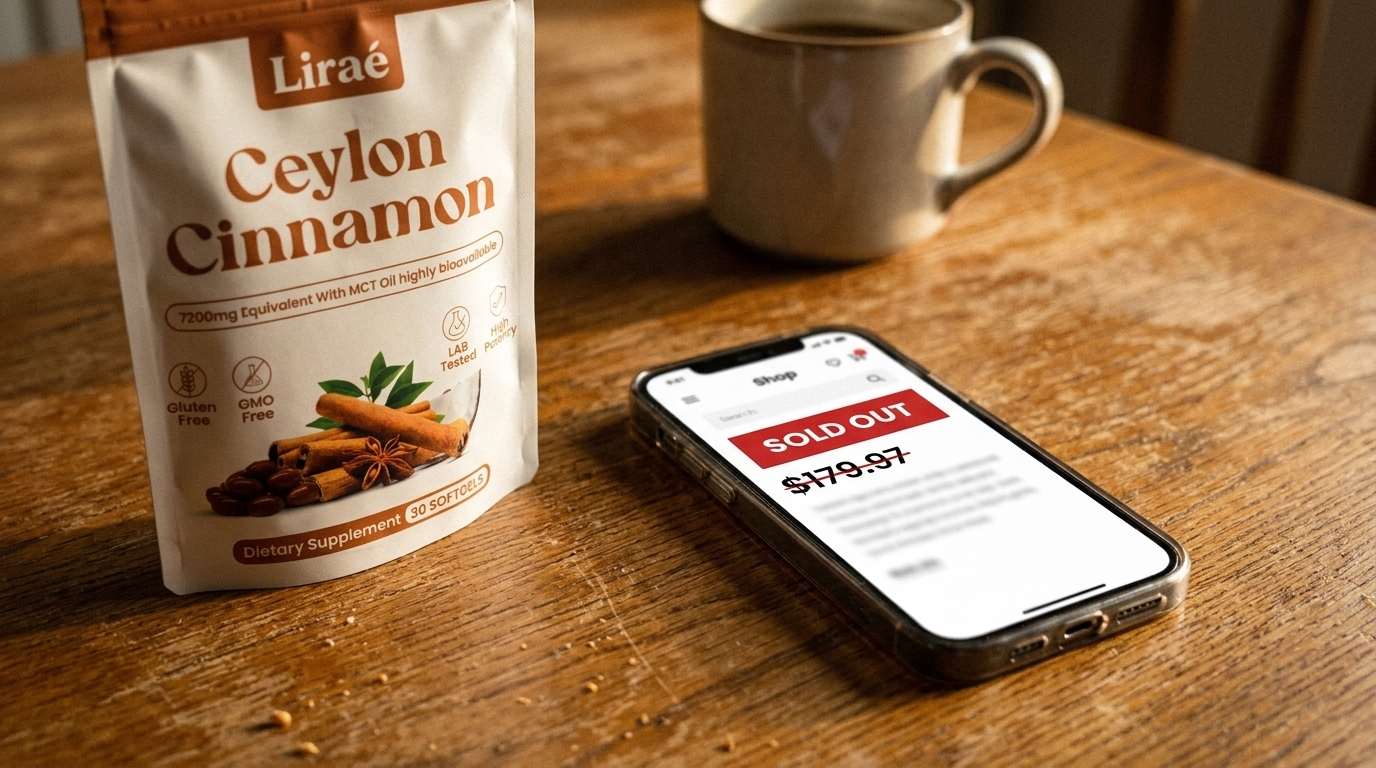
Then the buying experience. A “Final Summer Sale — Save 70%” countdown. A $59.99 price crossed out from $179.97 — a number no human being has ever paid for a pouch of cinnamon. A $3.95 “shipping protection” upsell at checkout. A free e-book. And, the week I first tried to order, a big “SOLD OUT” banner. It's the shortest guarantee of the five, too — 30 days, when the label itself says give it 4–8 weeks.
The six weeks were… fine. Nothing bad, nothing I could point to in my notebook. A pretty pouch asking me to trust a multiplication and a countdown clock.
A $179.97 'original price' that no one ever paid — and a 30-day guarantee on a '4–8 week' product.
Susan's take: A nice pouch, an honest ingredient — and a label that gives you a multiplication instead of a dose.
✕"7,200 mg equivalent" — the softgel holds a fraction of that; no standardization printed
✕Only a 30-day guarantee (the others offer 90) on a product that says "4–8 weeks"
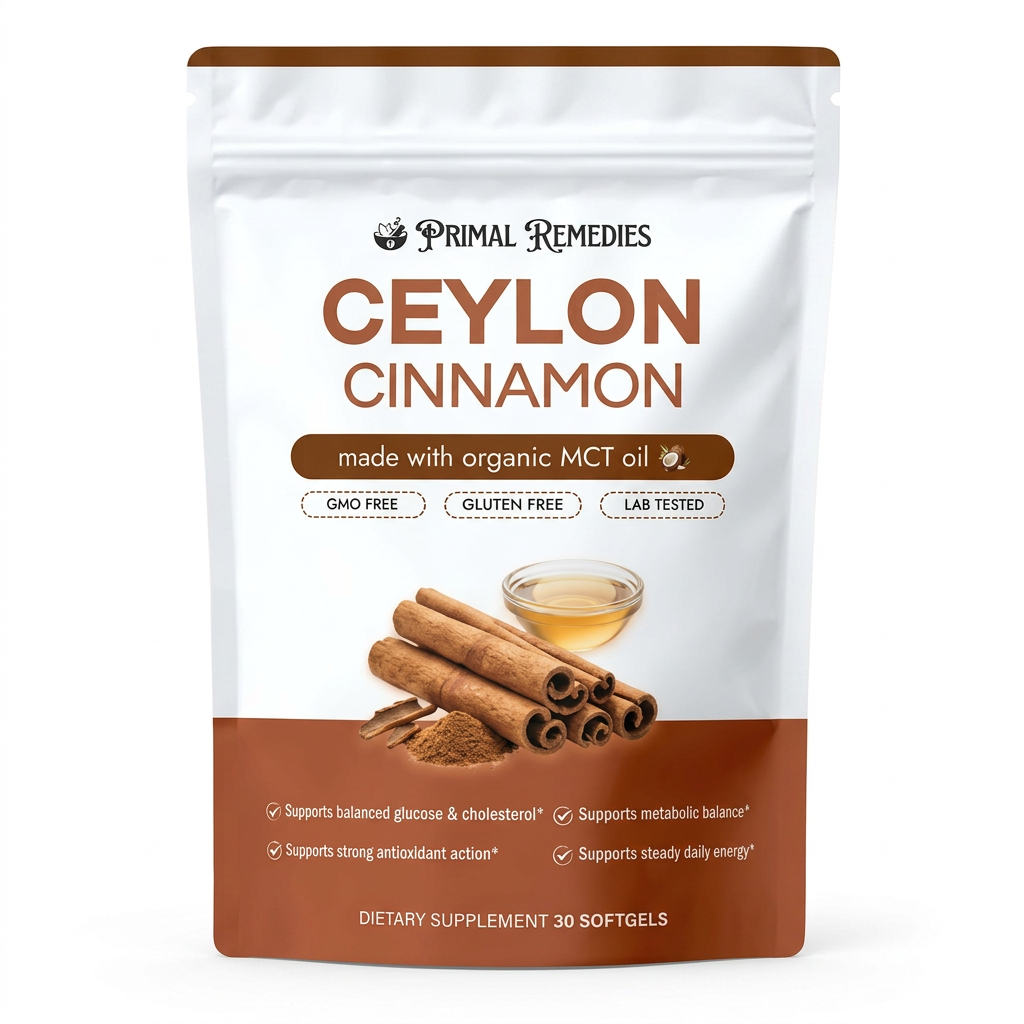
Primal Remedies — 'Trusted by a World-Leading Cardiologist.' Which One?
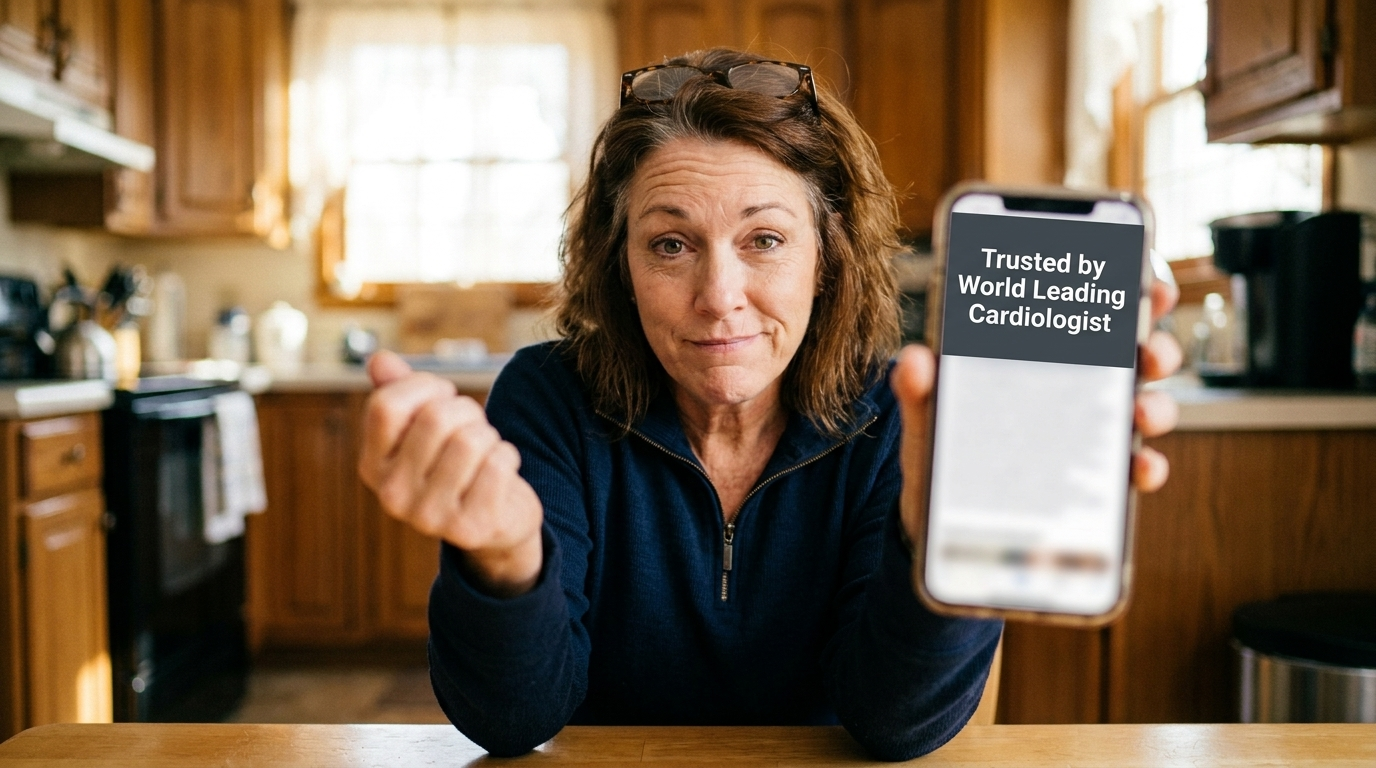
I found Primal Remedies the way most of you will: through an article that looked like news. Big headline. “Top Cardiologist: The Ancient Spice Helping 127,000+ Americans…” A before-and-after picture of an artery. A dark bar across the top: “Trusted by World Leading Cardiologist.”
I have worked beside cardiologists my entire adult life. I've handed them charts, chased them down hallways, watched them read results to frightened people at 7 a.m. So I did what any nurse would do: I looked for the name. There isn't one. Not on the article, not on the product page, not anywhere. Twenty-six years in cardiac care, and I've never met a cardiologist who'd put a supplement on their name without putting their name on the supplement. If the doctor were real, they'd be on the pouch.
The pouch itself? Ceylon cinnamon, 12:1, “7,200 mg equivalent,” MCT oil. Softgel. 90-day guarantee, which I'll credit them for. Third-party tested, they say. But flip it over and it reads — I noticed this and wrote it in the margin — almost word for word like the Liraé pouch. Same ratio. Same “equivalent.” Same MCT-oil-for-absorption line. Same “1–2 weeks for energy, 4–8 weeks for results.” I underlined it and moved on. I'd come back to that.
Six weeks: unremarkable. What stuck with me wasn't the softgel. It was that artery picture and a doctor who doesn't exist on paper — aimed at people who are scared. That's the part I can't un-see.
I've worked with cardiologists for 26 years. I looked for the name. There isn't one.
Susan's take: A 90-day guarantee and a softgel — wrapped in a nameless doctor and a scary artery. The label is a copy of the one before it.
✕"Trusted by a world-leading cardiologist" — no cardiologist named anywhere
✕Before/after artery graphics and heavy disease-adjacent claims
✕Same 12:1 "7,200 mg equivalent" + MCT-oil formula as Liraé
✕Permanent "70% off today" + countdown timer
✕No disclosed extract standardization
Brand tested
Metabolae — The Best of the Copies (And the Moment I Lined Them Up)
Credit where it's due: Metabolae is the most complete of the four cinnamon brands. Manufactured in the USA, third-party tested, a 90-day guarantee, a proper subscription option, a clean website. If I had to hand a patient one of the four cinnamon pouches, it would be this one.
But the website also says the product will “Restore Insulin Sensitivity” and “Stabilize Blood Sugar Levels,” and as a nurse I have to tell you: those aren't supplement claims, those are prescription claims. A supplement can support healthy blood sugar already in a normal range.† It doesn't restore anything. When a brand talks like a drug, it's usually because the label can't. And sure enough: 12:1, “7,200 mg equivalent,” MCT oil, no standardization printed. Plus a countdown clock stuck at 00:00:00 and a proud line about having “sold out 12 times last year.”
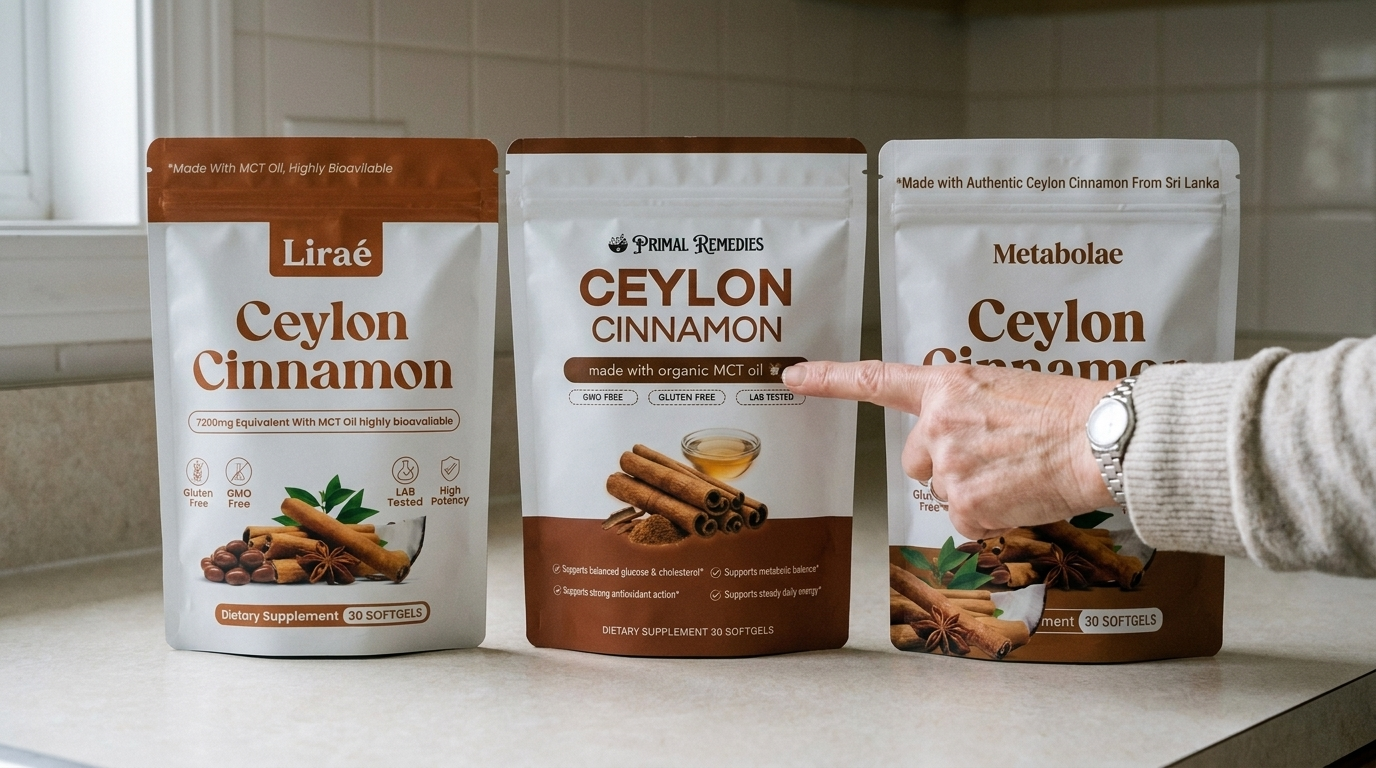
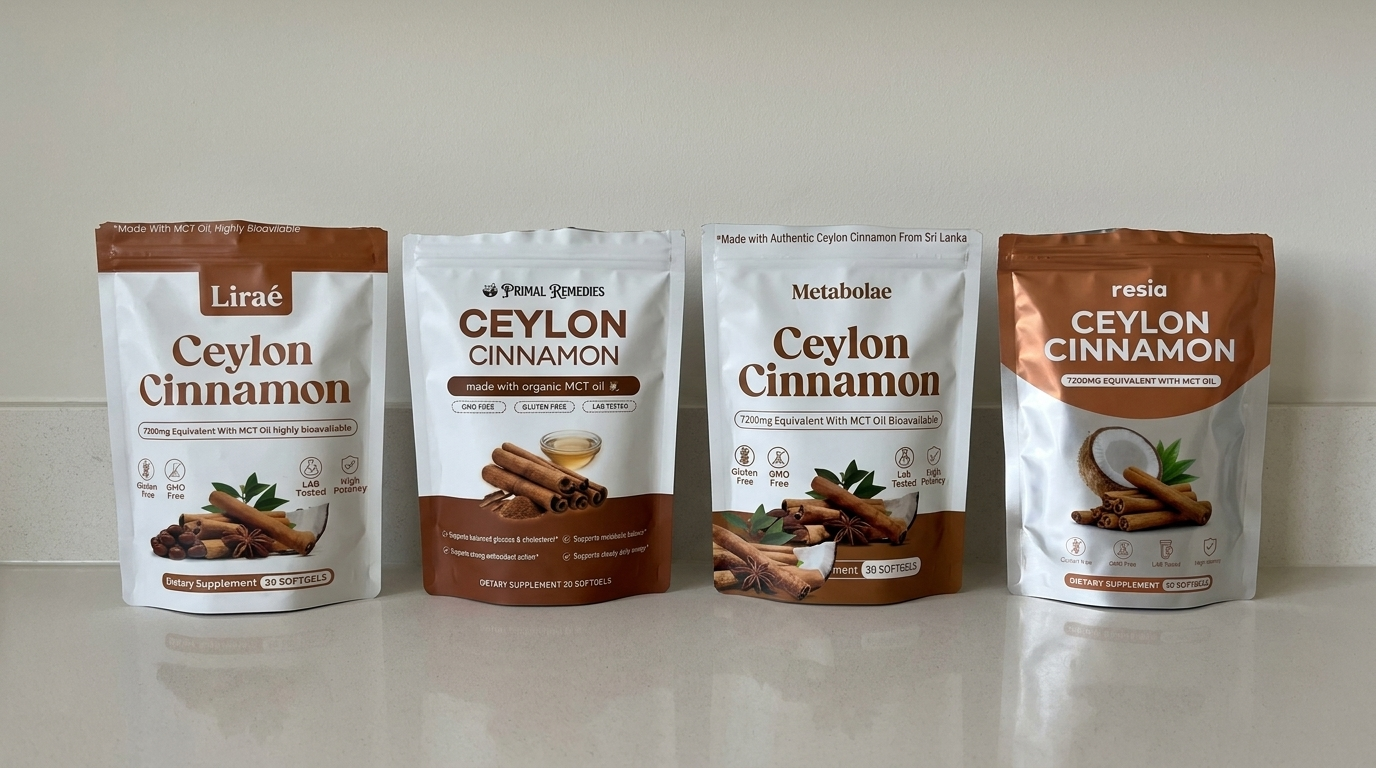
Here's where the test changed. On the first morning of the Metabolae run, I set its pouch on the counter next to the two empty ones I'd already finished. And I just… stared. Three pouches. Three brands. One product. Same “7,200 mg equivalent.” Same 12:1. Same MCT oil. Same “Sri Lanka.” Same softgel. Same timeline. Different logo, different price, different guarantee — that's it. Nobody had formulated anything. Somebody made a pouch, and three companies printed their names on it.
Six weeks on Metabolae: fine, again. Steady-ish afternoons, nothing my notebook could distinguish from the first two. Which, if it's the same product, is exactly what you'd expect.
Three brands, one label. This was the morning the whole test turned.
Susan's take: The best-run of the four cinnamon brands — and the one that made me realize the four are one.
✕"Restore insulin sensitivity" — a drug-style claim on a supplement
✕Same 12:1 "7,200 mg equivalent" + MCT-oil formula as Liraé and Primal Remedies
✕Countdown timer + "sold out 12 times last year" urgency
✕Cinnamon-only: no cholesterol or circulation angle at all
✕No standardization or polyphenol number on the label
Brand tested
Resia — The Cheapest Copy, and '#1 Choice for Doctors' (I Asked Some)
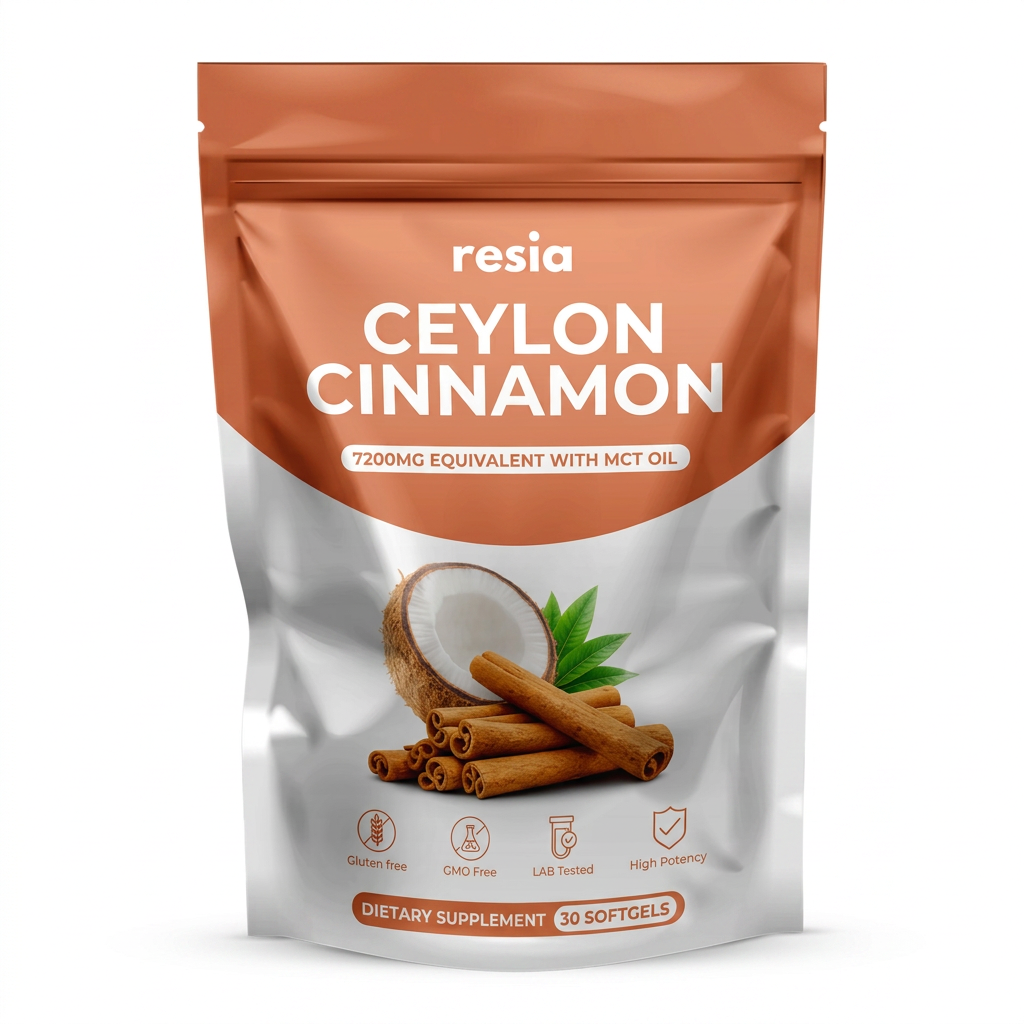
By the time Resia arrived I already knew what I'd find on the back, and I was right: 12:1, “7,200 mg equivalent,” MCT oil, softgel, Sri Lanka. The fourth name on the same pouch. What Resia does better than the others is price — at $34.99 it's the cheapest of the five — an FDA-registered facility, third-party testing, free shipping, a 90-day guarantee, and (I'll give them this) no countdown clock. Among the copies, it's the value pick.
But then, right on the product page: “#1 Choice For Doctors & Practitioners.” So I did something the marketing team probably didn't expect. I asked. Two cardiologists I've worked with for over a decade, one endocrinology NP, one hospital pharmacist. Not one of them had heard of it. That doesn't make it a bad product — but it makes that line a slogan, not a fact. Same for “200,000+ happy customers” and “99% bioavailability,” which appear with no source anywhere I could find.
And Resia's page says the same thing Metabolae's does — “restores insulin sensitivity” — which tells you the copy came from the same place the pouch did.
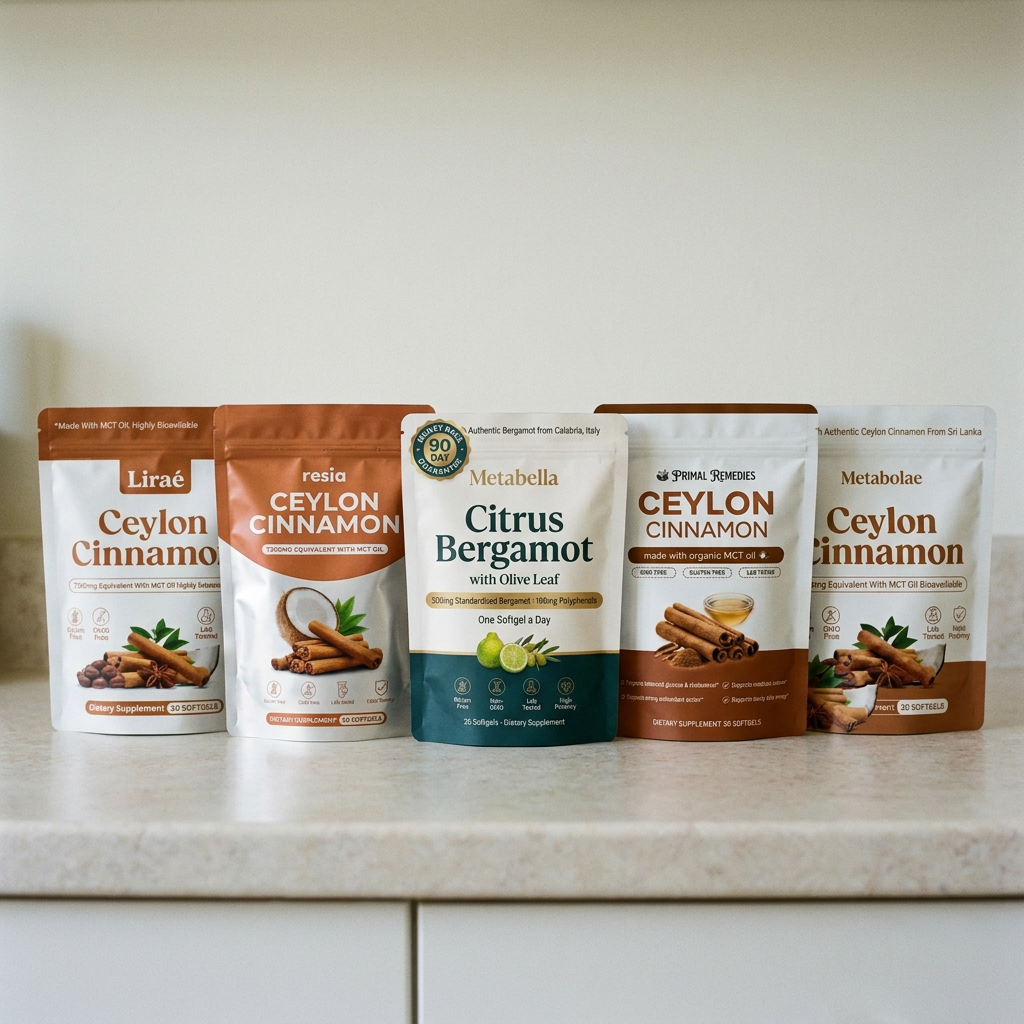
Six weeks: indistinguishable from the other three. At that point I wasn't surprised. I lined all four empty pouches up on the counter and took the photo below, because I knew nobody would believe me otherwise.
'#1 choice for doctors.' I asked four clinicians I've worked with for years. Zero had heard of it.
Susan's take: The cheapest and calmest of the copies — but a copy, with a doctor claim I couldn't verify by asking actual doctors.
✕Same 12:1 "7,200 mg equivalent" + MCT-oil formula as the other three
✕"#1 choice for doctors" — no doctor named; the clinicians I asked had never heard of it
✕"99% bioavailability," "200,000+ customers" — no source
✕"Restores insulin sensitivity" — the same drug-style claim as Metabolae
✕Cinnamon-only, no cholesterol angle, no standardization printed
The Thing Nobody Tells You: It's One Product With Four Names
Liraé. Primal Remedies. Metabolae. Resia. Same formula, same ratio, same claims, same softgel. Different logo.
I want to be very clear about this, because it's the most useful thing in this article. Four of the five best-selling “blood sugar” pouches in America are, as far as any label or website can tell you, the same product. Same ingredient. Same 12:1 extract. Same “7,200 mg equivalent” math. Same MCT-oil “absorption secret.” Same “coumarin-free Ceylon from Sri Lanka.” Same “1–2 weeks for energy, 4–8 weeks for results.” Each of them attacks “cheap Cassia” and “other brands” — while selling the identical pouch as the other brands.
None of them prints a standardization. None prints a polyphenol number. None points to a study on their own product. And here's what a nurse notices that a shopper might not: cinnamon's own trial record is genuinely mixed — some studies show a modest effect on fasting glucose, others show nothing, and the American Diabetes Association doesn't recommend cinnamon supplements for glucose control.† So four companies are competing on marketing budgets over an ingredient that, at best, does a little — and none of them formulated, standardized or checked anything. They bought a pouch and printed a name on it.
That was the point where I almost stopped the test and wrote my hallway speech. Then the fifth pouch arrived.
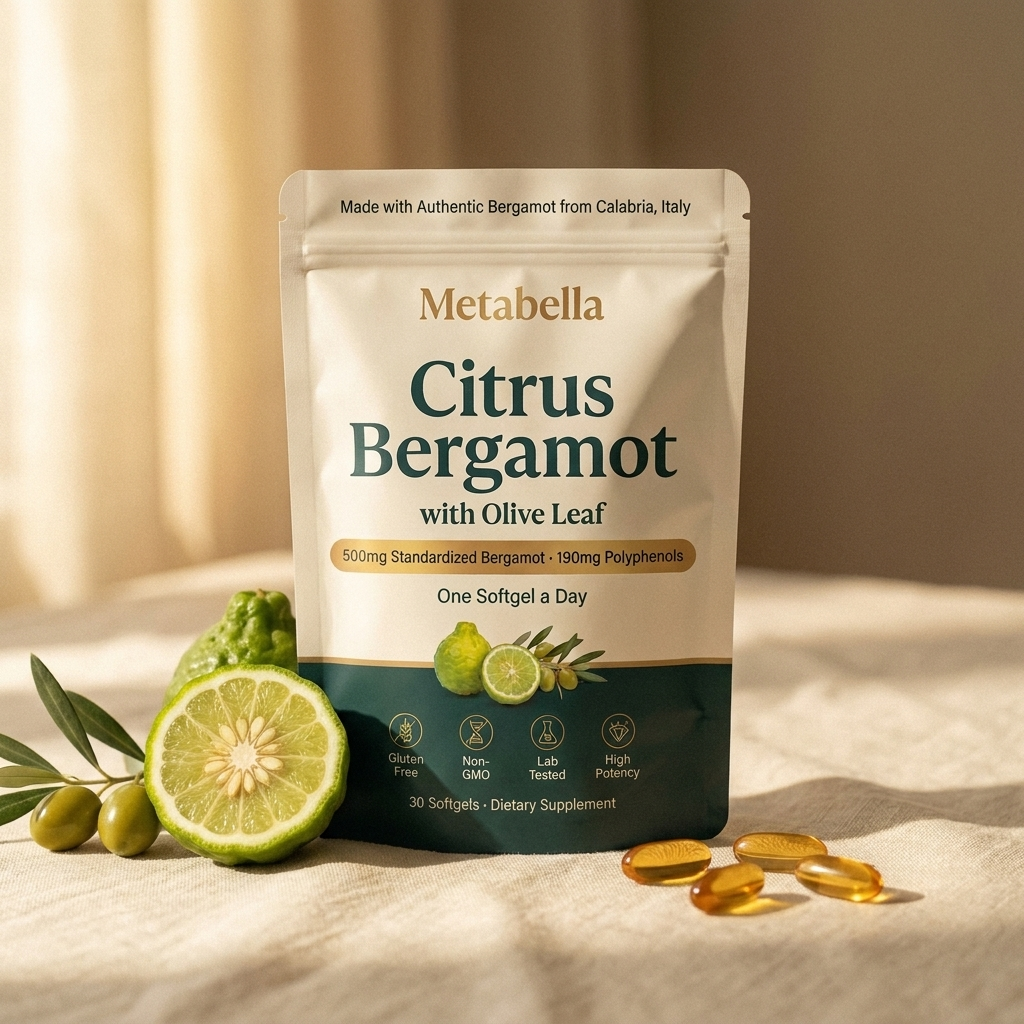
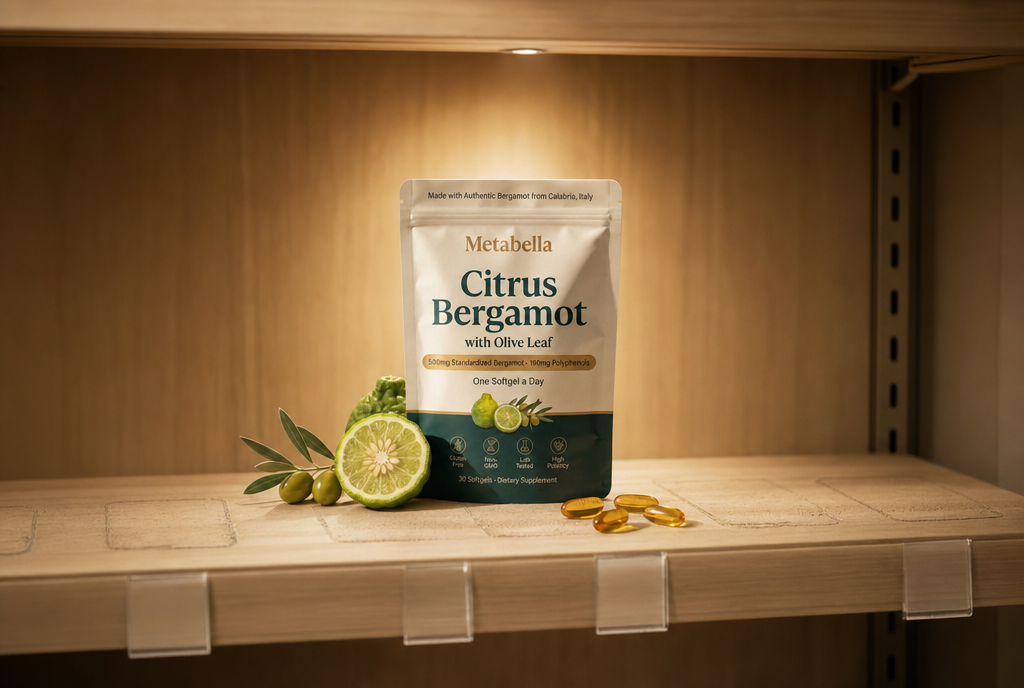
I'll admit: I opened the Metabella pouch already writing the sentence “and the fifth one was more of the same.” Then I read the front — not even the back, the front — and stopped. “500mg Standardized Bergamot · 190mg Polyphenols.” Not “equivalent.” Not a multiplication. The actual milligrams of the actual extract, and the actual polyphenol content it's standardized to. In 26 years of reading labels at bedsides, I can count on one hand the brands that print that.
And it wasn't cinnamon. It was Citrus bergamot — a Calabrian citrus I first heard about years ago from a lipid-clinic colleague, not from an ad. Bergamot's polyphenol fraction is the one botanical in this whole category with a real stack of human trials behind it — more than a dozen randomized controlled trials pooled in a 2022 analysis, and a double-blind trial in 2024, on supporting healthy cholesterol and LDL already within the normal range.† That's the ingredient the studies were actually about. The cinnamon pouches were borrowing the story; this one owns it.
Then the second ingredient: olive leaf extract, for healthy circulation and blood pressure already in the normal range.† As a cardiac nurse, that's the pairing I would have asked for. Cholesterol, blood sugar, circulation, energy — it's one system, and this is the only pouch of the five built for the system instead of one number. Add “Authentic Bergamot from Calabria, Italy” printed on the pouch — a named origin, not “sourced from Asia” — lab tested, gluten-free, non-GMO, one softgel a day, a 90-day guarantee. I went looking for the catch the way I'd gone looking for the cardiologist. I didn't find one.
The six weeks were quietly convincing. Around the end of week two, my afternoons stopped sagging — no 3 p.m. reach for the break-room cookies. By week three my evening walks felt lighter, and I'd stopped thinking about the softgel at all, which is the highest compliment a daily supplement can get. And then the part I promised I'd tell you honestly: at my follow-up bloodwork after the whole 30 weeks, my doctor looked at the panel, looked at me, and asked what I'd changed. I'm not going to print the numbers — one nurse is not a clinical trial. But I know what that question means, because I've heard doctors ask it maybe fifty times in 26 years, and it is never a bad sign.
I came in to write “save your money.” I left re-ordering one of them. In 26 years of hallway conversations, that has never happened to me before.
The only label of the five that printed a dose instead of a multiplication.
What's Actually Inside (and Why I Cared)
🍋 Citrus Bergamot — 500 mg, STANDARDIZED
The Calabrian citrus with 14+ human RCTs behind it for healthy cholesterol & LDL already in the normal range.† A dose, not an ‘equivalent.’
🧪 Polyphenols — 190 mg, printed
The active fraction that the bergamot studies are actually about. The only brand in the test that printed the number.
🫒 Olive Leaf Extract
The second Mediterranean staple — for healthy circulation & blood pressure already in the normal range.† The pairing a cardiac nurse would ask for.
💊 One Softgel a Day
Gluten-free, non-GMO, no harsh additives. Easy enough that I never skipped it — which is half of why anything works.
My Honest 6 Weeks on Metabella
Week 1
Nothing dramatic — and I'd have been suspicious if there were. But easy, no stomach upset, and I actually remembered it every day.
Week 2
The 3 p.m. sag eased. No break-room cookie run. First thing in my notebook I could actually point to.
Week 3
Evening walks felt lighter. Steadier days. I'd stopped thinking about the softgel at all.
Week 6
Follow-up bloodwork. My doctor asked what I'd changed. The only pouch left in my cabinet. The nurse re-ordered.
BEFOREAFTER
Not a miracle — just steadier. Which, after 26 years, is exactly what real results look like.
✓Prints the real dose on the front: 500 mg standardized bergamot + 190 mg polyphenols — no 'equivalent' math
✓Built on the ingredient with 14+ human RCTs for healthy cholesterol & LDL already in the normal range†
✓Adds olive leaf for circulation & blood pressure already in the normal range† — the whole picture, not one number
✓Authentic bergamot from Calabria, Italy — a named origin on the pouch
✓The only formula of the five that wasn't a white-label copy
✓One softgel a day — gluten-free, non-GMO, no harsh additives, no stomach upset in 6 weeks
✓Lab tested, clean label
✓90-day money-back guarantee
✓The only one of the five I voluntarily re-ordered — and the only one I'd hand my sister
✕It sells out — a lot. Twice I went to re-order and had to wait for the restock. Genuinely my only real complaint.
“I came to write ‘save your money.’ I left re-ordering one of them. In 26 years, that's a first.”
The One Thing I Wish Every Patient Knew Before Buying a ‘Blood Sugar’ Supplement
Read the number, not the word. “7,200 mg equivalent” is not 7,200 mg of anything in your softgel — it's an extract ratio multiplied on paper. A brand that's confident in its dose prints the dose: what's standardized, and to how much. Four of the five pouches in my kitchen wouldn't. One did.
And read the ingredient, not the story. Cinnamon has a nice story and a mixed trial record.† Bergamot has a dozen-plus human trials and, until recently, almost no ads.† When the pouch with the weaker science has the louder marketing — and four brands are selling it under four names — that tells you where the money went. Not into the formula.
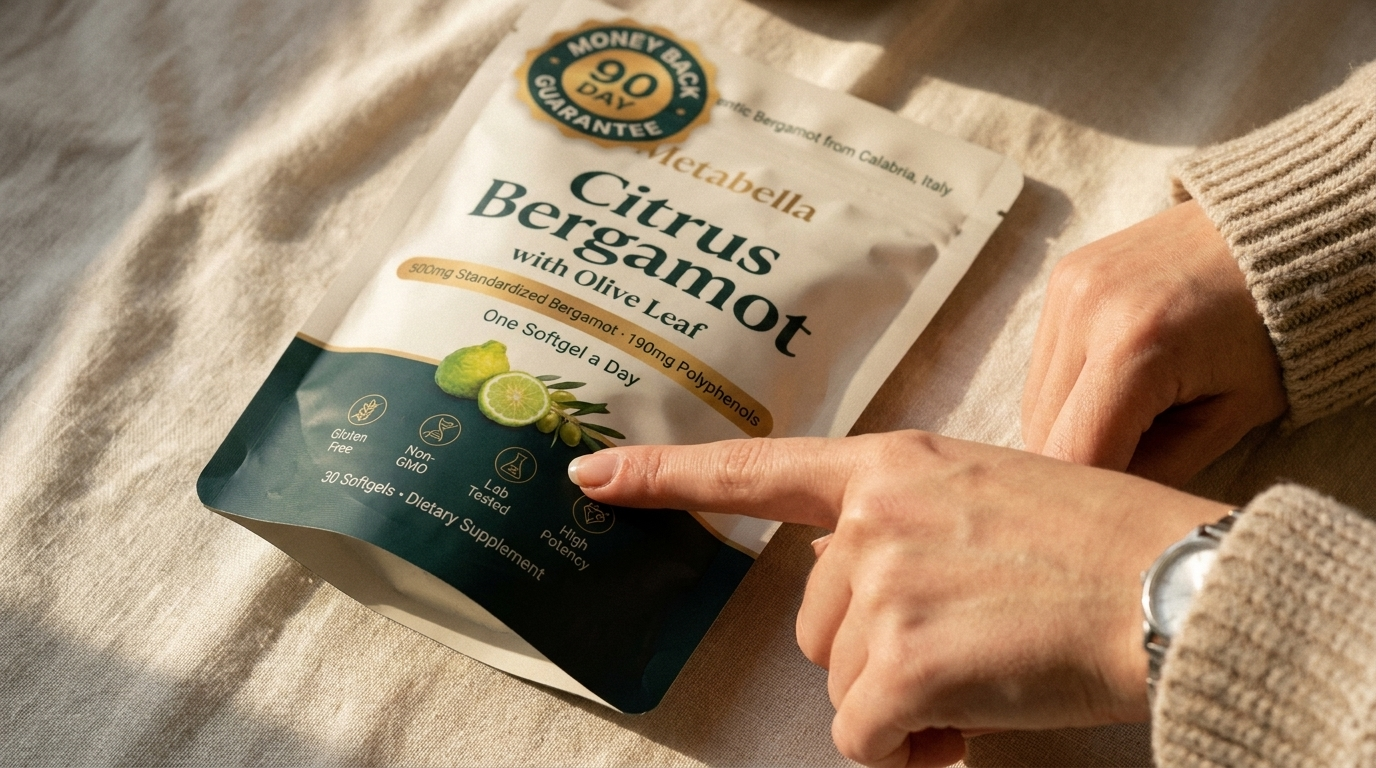
Left: a multiplication. Right: a dose. The difference is whether the brand trusts its own product.
Why I Trust Metabella's Formula
🔬 The Dose Is on the Label
500 mg standardized bergamot, 190 mg polyphenols — printed on the front, not hidden behind ‘equivalent.’
📚 The Ingredient Has the Trials
14+ human RCTs on bergamot polyphenols for healthy cholesterol already in the normal range.† Not a borrowed story.
🇮🇹 Named Origin, Lab Tested
Authentic Bergamot from Calabria, Italy. Lab tested, gluten-free, non-GMO, no harsh additives, 90-day guarantee.
⚠ Heads up: Metabella sells out a lot.
Because of demand and limited batches, it's frequently out of stock — the only real downside in this whole test. If it's available, I wouldn't wait. I learned that twice.
Realistically, end of week two for the steadier afternoons, week three for the walks feeling lighter. Anything cholesterol-related is a slower story — that's what your follow-up bloodwork is for, and I'd give it 8–12 weeks before you judge. Anyone promising week-one transformations is selling an ad, not a supplement.
My Honest Final Word
After 26 years at bedsides and 30 weeks of mornings testing this category, the single most useful thing I can tell you is this: the brand that prints its number is telling you something. Four of these five asked me to trust a multiplication and a countdown clock — and turned out to be one product wearing four logos. One showed me the dose, the ingredient with the trials behind it, and where it came from. That one — and only that one — was the pouch I couldn't bring myself to quit.
I came to write “save your money.” I left re-ordering Metabella, and I've since handed one to my sister. If you've read this far, you already know it's not a coincidence. And if you've watched it sell out twice the way I have, you also know not to wait around when it's back in stock.